
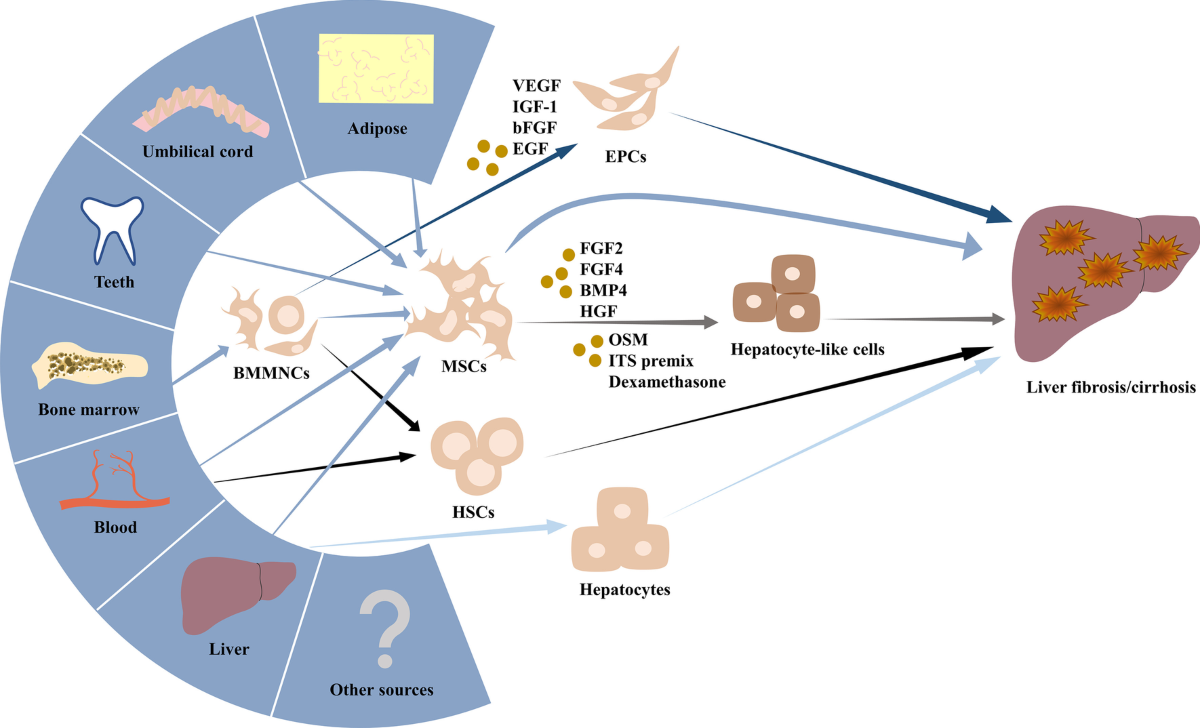
Liver cirrhosis is considered one of the most severe chronic diseases in which healthy liver cells are gradually replaced with scar tissue. Because of this, the organ performs its functions worse: blood purification, metabolism, and the production of proteins and enzymes become impaired. Many patients experience constant weakness, swelling, digestive problems, and a decline in quality of life. In recent years, stem cell treatment for cirrhosis has been discussed more and more often, since this approach is considered one of the promising directions of regenerative medicine for severe liver damage.
Why Liver Cirrhosis Is Considered a Dangerous Disease
The liver is capable of recovering on its own for a long time, but with permanent inflammation and damage, the organ’s cells gradually die. In the later stages, fibrosis and dense scar tissue begin to form, and these tissues can no longer perform normal liver functions.
The most common causes of cirrhosis:
- chronic viral hepatitis;
- alcohol abuse;
- fatty liver disease;
- autoimmune diseases;
- toxic damage caused by medications or chemicals.
According to the World Health Organization, complications of cirrhosis cause more than one million deaths worldwide every year. Internal bleeding, liver failure, and ascites are considered especially dangerous.
Many people seek medical help too late because in the early stages the disease may show almost no symptoms. Patients often associate fatigue and heaviness in the side with stress, diet, or age.
How Stem Cells Work in Liver Cirrhosis
The main goal of this therapy is to reduce inflammation, support tissue recovery, and improve liver function. Stem cells are not considered a “miracle treatment” that completely removes cirrhosis, but in some cases they help slow down the progression of the disease.
Mesenchymal stem cells are most commonly used. They have anti-inflammatory properties and can release substances that support regenerative processes.
What may happen after cell administration:
- reduction of inflammatory activity;
- improved blood supply to liver tissues;
- reduction in the severity of fibrosis;
- support of cell regeneration;
- improvement of laboratory test results.
Some clinical studies show improvement in albumin, bilirubin, and liver enzyme levels in some patients after a course of therapy. However, the result depends on the stage of cirrhosis, age, overall health condition, and the cause of the disease.
It is important to understand that even modern treatment methods have limitations in advanced cirrhosis with severe complications.
How the Treatment Procedure Is Performed
Before starting therapy, the patient usually undergoes a comprehensive examination. Doctors evaluate the degree of liver damage, the presence of complications, and possible contraindications.
Diagnostics usually include:
- blood tests;
- liver ultrasound or MRI;
- assessment of fibrosis level;
- blood clotting tests;
- screening for infections.
After preparation, cell material is collected or prepared. Depending on the method, the cells may be administered intravenously or through blood vessels connected to the liver.
The procedure itself usually takes from 30 minutes to several hours and generally does not require complex surgery. After administration, the patient is monitored by specialists to exclude adverse reactions.
Many patients worry about pain or difficult recovery, but in most cases the procedure is tolerated more easily than surgical intervention. Nevertheless, regular medical follow-up and monitoring of laboratory tests are required after treatment.
What Results Patients Expect
The main goal of therapy is not only to prolong life but also to improve a person’s everyday condition. With a positive response from the body, patients sometimes notice reduced weakness, improved appetite, and decreased swelling.
Possible positive changes:
- improvement of biochemical indicators;
- reduction of inflammatory processes;
- reduction of chronic fatigue symptoms;
- improvement in quality of life;
- slowing of disease progression.
However, doctors usually warn that the effect develops gradually and is not always the same for different people.
Liver cirrhosis remains a serious disease that requires a comprehensive approach and constant medical supervision. Stem cell therapy is considered one of the promising areas of modern regenerative medicine that may help some patients improve their condition and slow down the progression of the disease. At the same time, the effectiveness of treatment depends on the stage of cirrhosis, the cause of liver damage, and the overall condition of the body. That is why the decision to undergo such therapy should be made only after a full examination and consultation with specialists.